Our Impact
The Federal Home Loan Banks were built on a simple yet powerful idea:
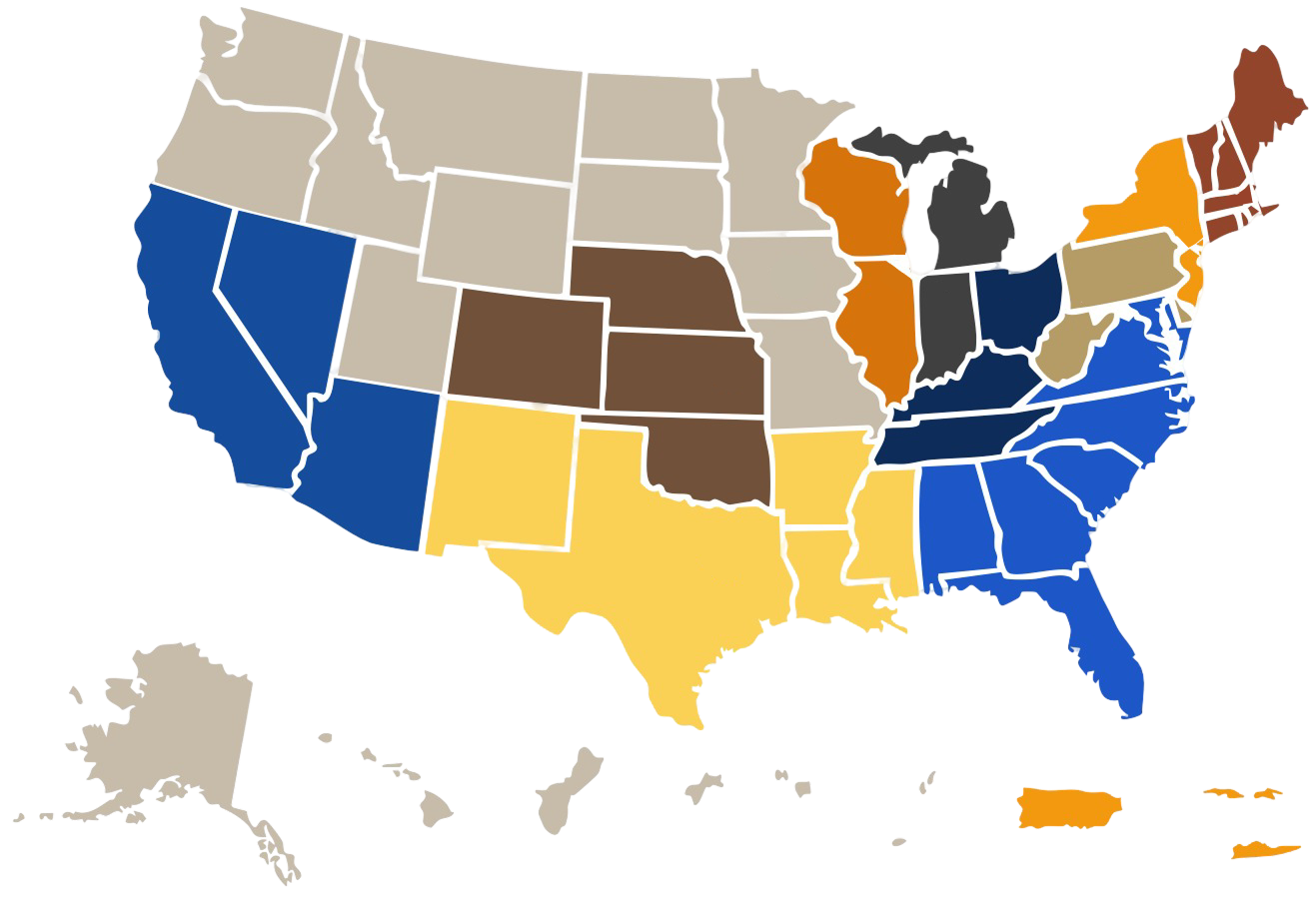
When local lenders have reliable access to funding, communities grow stronger. Established by Congress in 1932, the Federal Home Loan Bank System is a network of 11 regional, member-owned cooperatives that provide fully collateralized funding to approximately 6,400 financial institutions across the country.
Keep reading to see the impact we made in 2025.
Impact in Numbers
Providing liquidity
Promoting affordability
Impact Stories
Impact in Numbers

$
Billion
Advances outstanding

$
Billion
Outstanding letters of credit

$
Billion
Mortgage Loans held

$
Million
Voluntary contributions to affordable housing and economic development

+
Families helped with housing

+
First-time homeowners helped with home purchases
Watch This Video to Learn More About the Federal Home Loan Banks
Providing liquidity
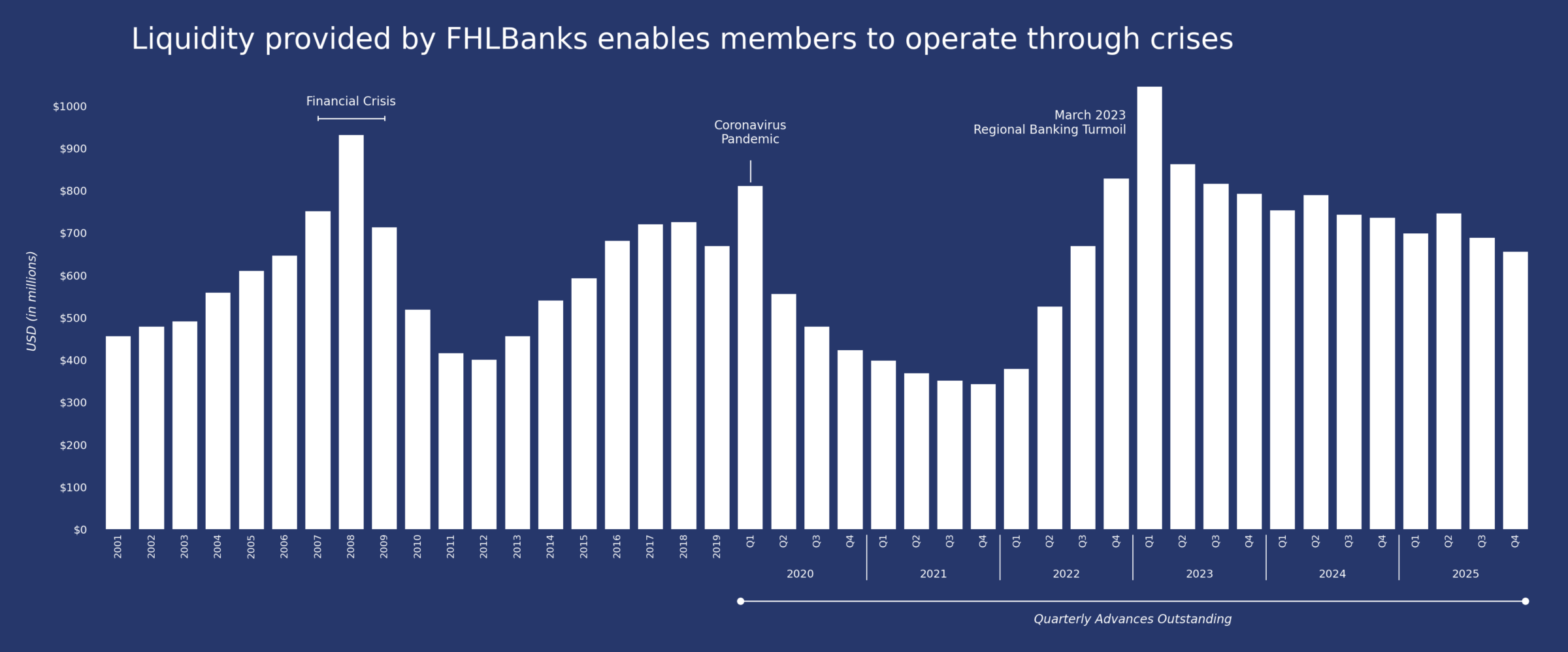
For more than nine decades, we’ve been a stabilizing force supporting U.S. financial institutions, helping members make credit available across all economic cycles, including periods of market disruption.
Advances
The advances we provide to our members are fully collateralized loans backed by real estate-related assets and eligible investment securities (e.g., one- to four-family residential mortgage loans, commercial real estate loans, mortgage-backed securities, and U.S. government securities). We partner with our members to structure advances that support mortgage lending and other local credit activities, provide longer-term liquidity, complement their balance sheet and funding strategies, manage interest-rate and asset-liability risk, and respond quickly to fluctuations in deposits or seasonal shifts in lending demand.
Mortgage and bond purchases
The majority of the Federal Home Loan Banks purchase fixed-rate 15- to 30-year mortgages directly from their members through our Mortgage Asset Program (MAP®), Mortgage Partnership Finance (MPF®) Program, and Mortgage Purchase Program (MPP), bolstering lending. Beyond providing members with another mechanism to access liquidity, these programs incentivize prudent risk management by compensating members for sharing the credit risk.
Additionally, we invest in housing bonds issued by state and local housing finance agencies, providing these agencies with liquidity to support housing finance in their communities.
Letters of credit
We use letters of credit to assist members and non-member housing associates with residential housing finance, local lending, asset-liability management, and liquidity needs. Letters of credit, secured through pledged collateral, guarantee members’ contractual obligations to third-party beneficiaries. For example, they help financial institutions secure deposits from city, state, and municipal entities such as schools, libraries, police and fire departments, and utilities.
Promoting affordability
The Federal Home Loan Banks directly promote housing affordability and small business growth by working with our member institutions and community partners to expand access to funding for housing, homeownership, and local economic development.
Affordable Housing Program (AHP)
A hallmark of our commitment to housing affordability, AHP subsidizes the purchase, construction, rehabilitation, and preservation of affordable rental and owner-occupied homes. Each Federal Home Loan Bank directs at least 10 percent of the prior year’s net income to fund AHP, making it the nation’s largest source of privately funded grants for housing and community development. Since AHP’s inception in 1990, we have delivered more than $9 billion through the program, adapting over time to meet the changing needs of our members and the communities they serve. We also sponsor AHP Homeownership Set-Aside Programs to assist first- time or income-qualified homebuyers with down payment, closing, and home rehabilitation costs.
Community Investment Program (CIP) & Community Investment Cash Advance (CICA)
CIP and CICA provide members with access to discounted funding—below standard advance rates—to finance projects that deliver measurable community impact. CIP finances affordable housing projects for specific populations, such as underserved communities, seniors, and low- to-moderate income households, while CICA primarily supports economic development projects that strengthen lower-income communities and small businesses.
Voluntary programs
The individual Federal Home Loan Banks go beyond the core universal programs, making voluntary contributions to support district-specific initiatives. Ranging from affordable housing construction to targeted economic development, these initiatives often focus on small businesses, underserved areas, and disaster relief. Our regional structure enables each Federal Home Loan Bank to respond directly to local needs with tailored solutions.
Strengthening local economies and small businesses
“FHLBank advances can bridge the timing mismatches between funding needs and deposit flows for small farm lending, with credit demands concentrated around planting and harvest periods, while repayments occur after crop sales. Moreover, FHLBank advances support community development lending through providing long-term, fixed-rate funding that matches the characteristics of community development projects.”

Impact Stories From the 11 Regional Federal Home Loan Banks