
Membership in the FHLBank System is open to a range of financial institutions, including commercial banks, credit unions, savings institutions, insurance companies, and community development financial institutions (CDFIs).[1] This diversity of membership brings together institutions with different business models, market perspectives, and liquidity needs. It also strengthens the overall cooperative by broadening its reach and reducing reliance on any single member group, ensuring advance demand remains stable across the economic cycle and allowing the System to provide cost-effective liquidity to all members and the communities they serve.
Insurance companies have been eligible for membership since the System was founded in 1932 and are longstanding participants in U.S. real estate finance.[2] Today, insurance companies provide significant funding for single-family mortgages, multifamily residential properties, and commercial real estate, including mixed-use developments. Life insurance companies, for example, held more than $161 billion in direct one-to-four family residential mortgages, $269 billion in multifamily residential mortgage assets, and $277 billion in agency- and GSE-backed securities at the end of the second quarter, according to the Fed’s most recent Z.1 release.[3] Together, life insurers total investment in the mortgage space stood at more than $1.2 trillion.
The housing connection extends beyond those balance-sheet categories. A recent report by the American Council of Life Insurers (ACLI) notes that life insurance company holdings include more than $15 billion in municipal housing bonds and investments that qualify for Low-Income Housing Tax Credits as of the end of 2023.[4] ACLI further reports that life insurer’s residential mortgage investments have grown at an average annual rate of 14.3% since 2011, increasing about 12 times faster than the total residential mortgage market.
Significantly, insurance company use of FHLBank advances has remained remarkably consistent in recent years, helping contribute to the strength and stability of the System. Because insurance companies have liability structures and funding cycles that differ from depository institutions, this helps create a more diversified pattern of advance demand across the System. Capital markets value predictable future funding demand, and because advances generate interest income for the FHLBanks, consistent demand for advances by insurance companies helps moderate fluctuations in System earnings and supports the System’s ability to serve members and fund housing and community support programs.
During the six-year period shown in Figure 1, year-end advance balances fluctuated up and down for banks, savings institutions, credit unions, and CDFIs, while insurance company advances steadily increased each year. This consistency helped the FHLBanks maintain a consistent presence in capital markets and generate reliable advance income for the System even as utilization by other member types fluctuated.
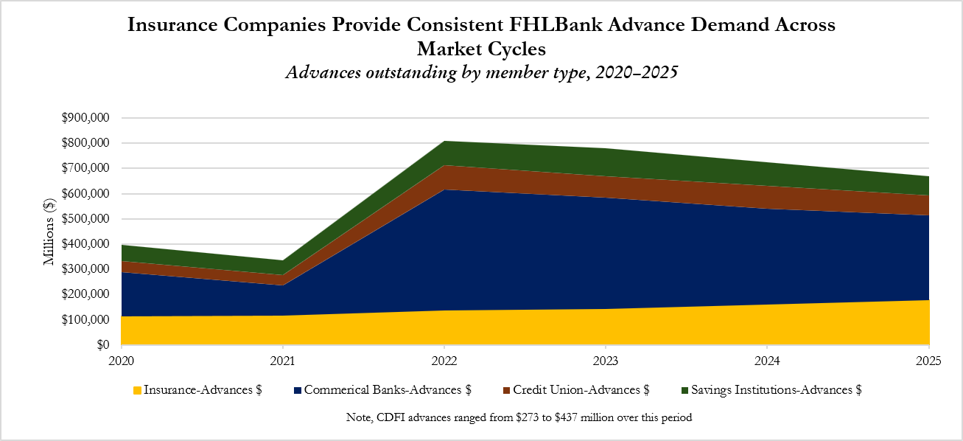 Figure 1: FHLBank Member Advances Outstanding – 2020-2025
A simple correlation analysis shows how insurance company members support the System. From 2020 to 2025, insurance company advances had the highest correlation of any member type to System net income (0.78), AHP assessments (0.77), and voluntary program contributions (0.94). While six years may not be sufficient to draw strong causal conclusions, the results are illustrative of the relationship and highlight how liquidity demands of insurance company members support the System versus advance demand by other members that tend to fluctuate more with market cycles.
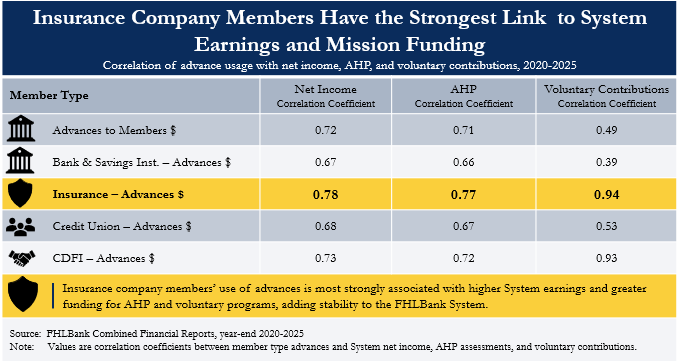 Figure 2: Correlations Between Member Advances and FHLBank Earnings, AHP, and Voluntary Program Funding
Insurance company membership provides benefits to the entire FHLBank System, and, by extension, to communities across the country. The FHLBank cooperative provides financial strength to, and is strengthened by, the diversity of its approximately 6,300 member financial institution.[5] Earnings generated from advances, and other liquidity products, support the FHLBanks’ affordable housing programs and approximately five dozen discretionary programs, through their members, across the 11 FHLBank districts.
Since 1989, the Federal Home Loan Bank Act has required each of the 11 FHLBanks to allocate 10 percent of earnings to Affordable Housing Program (AHP) initiatives.[6] AHP funds are awarded through FHLBank members to support the purchase, construction, and rehabilitation of affordable owner-occupied and rental housing. In recent years the FHLBanks have committed at least 50 percent above statutory AHP requirements for voluntary housing and community investment programs.
An estimate of insurance members’ contribution to AHP and voluntary programs is illustrated in Figure 3.[7] As shown, insurance members are estimated to have contributed $1.13 billion to AHP and voluntary programs over the six-year period from 2020-2025. Without insurance company members, cumulative AHP and voluntary program funding would have been reduced by more than one-quarter.
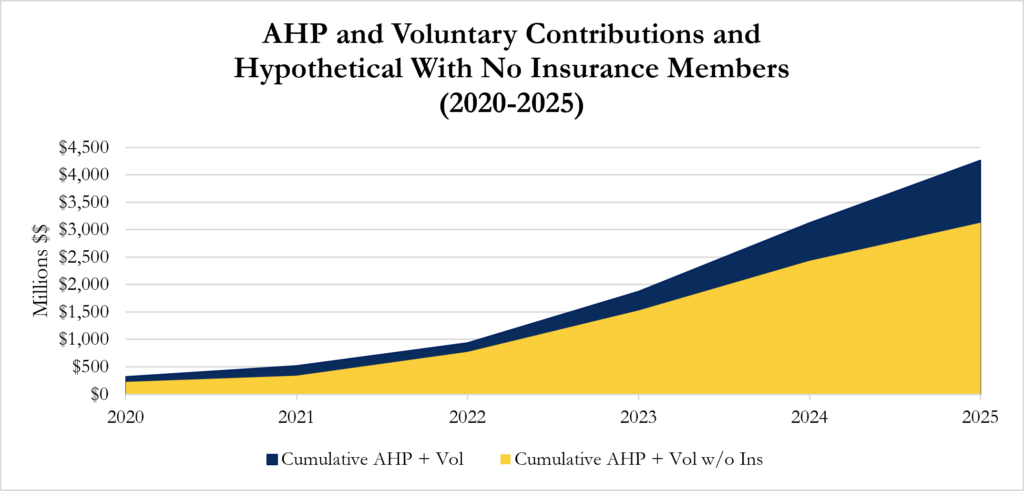 Figure 3: Effect of Insurance Company Advances on AHP and Voluntary Program Funding
FHFA’s 2025 Mission Activities Report found that the AHP General Fund supported the creation or preservation of over 848,000 affordable housing units since 1990.[8] While insurance company membership and advance utilization have not always been at today’s levels, the connection is straightforward: advances generate earnings; earnings generate AHP assessments and funding for discretionary housing and community investment programs; and those resources flow through FHLBank members, including community banks and credit unions, to households and communities nationwide.
It is clear that insurance companies contribute significantly to FHLBank earnings and community investment funding. The consistent advance utilization of insurance members provides stable income for the System, moderates fluctuations in demand by other members, and increases the funding available for the FHLBanks’ Affordable Housing Program and dozens of voluntary programs. Membership in the FHLBanks does not simply benefit insurers; it strengthens the System, to the benefit of all members, and expands the System’s capacity to deliver on its housing and community investment mission.
[1] https://fhlbanks.com/about-us/
[2] https://fhlbanks.com/fhlbank-act/
[3] https://www.federalreserve.gov/releases/z1/default.htm
[4] https://impact.acli.com/the-housing-market-needs-more-supply-and-affordability-life-insurers-invest-in-both/
[5] https://cdn.fhlb-of.com/files/2026/2026Q2CFR.pdf
[6] https://fhlbanks.com/affordable-housing-voluntary-programs/
[7] The insurance company share of AHP and voluntary program contributions is an estimate based on insurance company advances outstanding at the end of each year. AHP assessments are statutorily tied to earnings and the FHLBanks have committed to providing 50%, or more, in additional funding for voluntary programs in recent years.
[8] https://www.fhfa.gov/reports/fhlbank-mission-activities/2025