
Ninety-four years after President Herbert Hoover signed the Federal Home Loan Bank Act in 1932, the Federal Home Loan Banks continue to execute on their Congressionally established mission: providing collateralized liquidity and supporting housing finance and community investment.
The Federal Housing Finance Agency’s 2025 Federal Home Loan Bank Mission Activities Report provides compelling evidence of the meaningful impact that derives from fulfilling that mission. The report details how the 11 FHLBanks:
- support affordable rental housing,
- expand access to homeownership,
- finance community and economic development,
- partner with Community Development Financial Institutions (CDFIs),
- and provide secondary-market access for community mortgage lenders.
Affordable housing support has grown substantially
As Figure 1 of the report illustrates, the FHLBanks’ annual Affordable Housing Program (AHP) contributions more than tripled from 2022 to 2024 and remained at a historically high level in 2025.
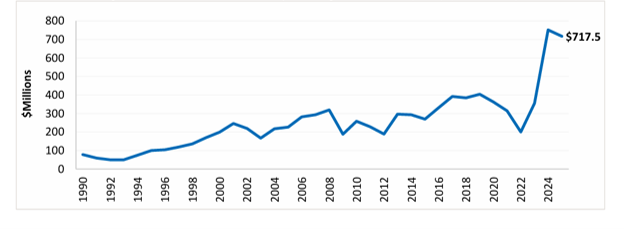 Figure 1: FHLBanks’ AHP Assessments ($MM) 1990-2025[i]
Each calendar year, the FHLBanks contribute funds to the Affordable Housing Program, which are awarded in the following year to support new affordable-housing development and provide subsidies that help make homeownership more attainable. In 2025, FHFA reports that the FHLBanks contributed approximately $718 million to AHP and awarded $875.5 million through the program. Those awards supported 42,132 homes, including:
- 25,804 units through the competitive AHP General Fund;
- 16,042 households through AHP Set-Aside programs; and
- 286 units through the AHP Targeted Fund.
Since the General Fund’s inception in 1990, the FHLBanks have awarded $7.4 billion to more than 20,700 projects supporting over 848,000 affordable homes.
These numbers demonstrate both the scale and the durability of the FHLBanks’ commitment and the nationwide footprint of the program. AHP is not a temporary initiative or a response to a single housing cycle. It is a permanent, privately funded mechanism through which earnings generated by the FHLBanks’ liquidity mission flow back to communities, helping sustain economic vibrancy, employment, home ownership, and growth.
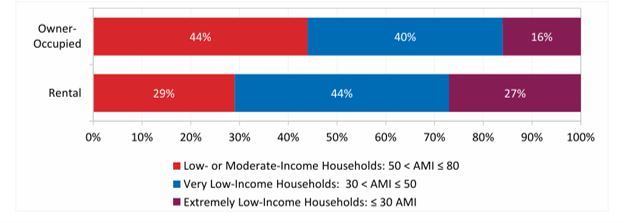 Figure 2: FHLBanks’ 2025 General Fund, Beneficiary Income Distribution[ii]
Directing assistance to households with the greatest needs
Figure 2 presents the distribution of AHP General Fund beneficiaries by housing tenure and income distribution.
General Fund awards are statutorily required to target households earning no more than 80% of area median income. However, the majority of 2025 General Fund awards for both owner-occupied and rental units benefited households earning 50% or less of area median income:
- 56% of owner-occupied units were targeted to very low- or extremely low-income households;
- 71% of rental units were targeted to very low- or extremely low-income households;
- 16% of owner-occupied units served households earning no more than 30% of area median income; and
- 27% of rental units served households earning no more than 30% of area median income.
The share of owner-occupied units for households earning 50% or less of area median income increased markedly—from 39% in 2024 to 56% in 2025, helping address one of the greatest areas of need in the United States.
These results make clear that AHP resources are reaching households that face some of the greatest barriers to obtaining safe, stable and affordable housing. The program is not simply increasing housing activity in the aggregate; it is directing assistance toward families and communities for which conventional financing may otherwise remain out of reach.
Figure 2 reinforces that conclusion. It compares the national average house price with the average price of homes purchased with assistance from AHP Set-Aside funds. In every year from 2010 through 2025, the average price of an AHP-assisted home was less than half the national average.
That consistent difference provides tangible evidence that AHP is supporting modestly priced homes and income-eligible buyers. In 2025 alone, AHP Set-Aside funds provided $257 million, with 94% directed to down-payment and closing-cost assistance.[1] Additionally, AHP funds aim to make the American dream possible with 89 percent of awards going to first-time homebuyers.
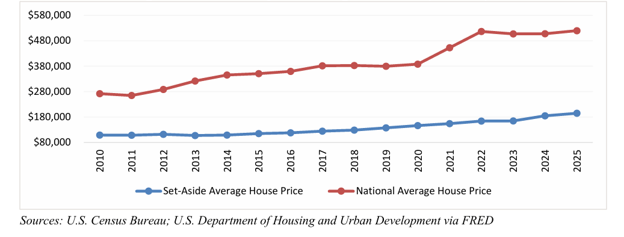 Figure 3: House Prices in the U.S. and for AHP Set-Aside Recipients 2010-2025[iii]
Going beyond statutory requirements
AHP is only one part of the FHLBanks’ housing and community development impact. A more fulsome appreciation of the FHLBank’s contribution to affordable housing and community development comes with assessing both their statutory and voluntary contributions.
In 2025, the FHLBanks made $718 million in statutory AHP contributions, while also collectively making $507 million in voluntary contributions to support affordable housing and economic development in their districts. That voluntary commitment was roughly 70% of additional funding on top of the statutorily required AHP amount.
FHFA separately reports that the FHLBanks disbursed $695.6 million through voluntary mission initiatives during 2025, up approximately 50% from $462.3 million in 2024. The difference between contributions and disbursements reflects the timing between when funds are committed and when they are deployed.
Voluntary programs allow each FHLBank to respond to the particular needs within its district. In 2025, voluntary program support included:
- $228.4 million to create or preserve more than 5,200 affordable rental homes;
- $187.8 million in down-payment and closing-cost assistance for more than 7,700 households;
- $93 million in mortgage-rate buydowns, assisting more than 6,600 households;
- $62.8 million for capacity-building at more than 100 community organizations;
- $22 million for home repairs and rehabilitation benefiting more than 2,300 households;
- $16.4 million in disaster relief and recovery assistance that supported more than 800 households and over 100 businesses; and
- $14.7 million for Native American and Tribal housing and capacity-building initiatives.
Some specific areas that FHFA’s report highlights include voluntary programs designed to support middle-income and first-generation homeownership, Native American housing, rural housing, senior housing, disaster recovery and resilience, heirs’ property and title barriers, job creation, technical assistance, and the development of future community leaders.
These initiatives underscore one of the central strengths of the FHLBank System: a multilayered, decentralized affordable housing program delivered through 11 regional, member-owned cooperatives that can tailor programs to local conditions.
Expanding community and economic development financing
The FHLBanks also advance their mission through below-market and targeted lending under the Community Investment Program (CIP) and Community Investment Cash Advance (CICA) program.
In 2025, CIP and CICA provided $8.4 billion in financing for 889 projects.[2] CIP financing supported 27,079 housing units—approximately 6,000 more than in 2024—including 20,258 owner-occupied homes and 6,821 rental units.
As Figure 4 shows, combined CIP and CICA economic-development advances have increased in each of the past four years. By 2025, they had risen to more than three times their 2021 level. This financing allows FHLBank members to offer longer-term and more affordable credit in areas where access to capital may otherwise be constrained.
The report also documents significant growth in letters of credit supporting community investment. CIP letters of credit increased from $422.3 million in 2024 to $798 million in 2025, while CICA letters of credit increased from $11.4 million to $45 million.
These innovative programs illustrate how the FHLBanks’ liquidity capacity can be directed toward housing and economic-development needs—not only through grants, but also through advances and credit enhancements that leverage additional private investment.
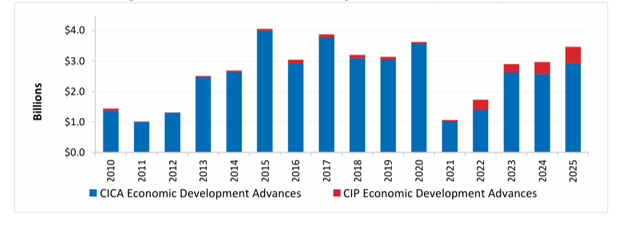 Figure 4: FHLBanks’ CIP and CICA Advances 2010-2025[iv]
Strengthening CDFIs and underserved communities
Figure 5 presents meaningful growth in non-depository CDFI membership and FHLBank advances to non-depository CDFI members.
In 2008, the Housing and Economic Recovery Act (HERA) expanded membership eligibility to non-depository CDFIs and in 2010 the System had four such members. By 2025, that number had increased to 83, with non-depository CDFIs represented in all 11 FHLBank districts. Advances to these members reached $436.9 million at year-end 2025, up from $381.3 million one year earlier.
While non-depository CDFIs remain a small share of total FHLBank membership, the progress over the past 15 years is clear. FHLBank membership provides these mission-driven lenders with access to reliable, long-term funding that can expand their capacity to finance affordable housing, small businesses and economic development in underserved communities.
FHFA’s report also notes that voluntary programs support CDFIs outside the traditional advance structure. For example, FHLBank Chicago’s $50 million Community First Fund provides lower-interest, long-term financing to CDFIs, community development loan funds and state housing finance agencies.
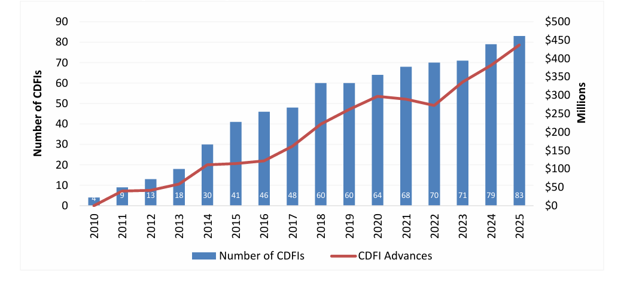 Figure 5: FHLBank Non-Depository CDFI Members and Advances 2010-2025[v]
Helping community mortgage lenders compete
The FHLBanks’ Acquired Member Asset programs—MPF, MPP and MAP—are another significant component of their housing finance mission. These programs provide an important secondary-market outlet, particularly for smaller financial institutions that may lack the scale or infrastructure to access capital markets as efficiently as larger lenders.
FHFA establishes two annual mortgage purchase goals for FHLBanks with active AMA programs. Under the mortgage-purchase housing goal, at least 20% of qualifying purchases must support low-income families, very low-income families or families living in low-income areas. Under the community-based user goal, at least 50% of participating financial institutions—or a share at least three percentage points above the prior year’s performance—must have assets at or below the applicable threshold, which was $1.5 billion in 2025.
All nine FHLBanks with active AMA programs met both goals in 2025.
FHFA reports that the number of qualifying loans purchased for low-income and very low-income families and families in low-income areas also increased substantially—from 13,072 in 2024 to 18,496 in 2025, and every bank exceeded thew 50% CFI goal as shown in Figure 6[3].
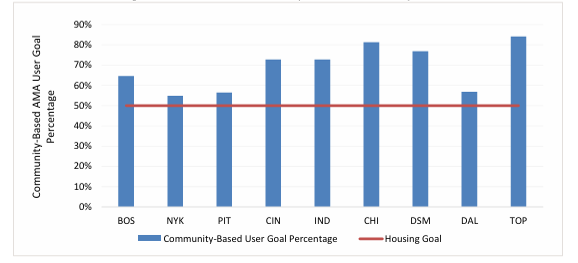 Figure 6: FHLBanks 2025 Acquired Member Asset (AMA) Community-Based User Goal[vi]
These mission achievement results confirm that the FHLBanks’ mortgage-purchase programs are reaching lower-income borrowers and provide secondary-market access to community-based institutions. By allowing community banks and credit unions to originate mortgages in their own names, maintain customer relationships, and reduce interest-rate risk, AMA programs help level the playing field with larger banks and the nonbank institutions that have come to dominate the mortgage-origination market over the past 15 years.
Summary: A dedicated mission that continues to evolve
FHFA’s Mission Activities Report reflects a System that consistently provides reliability and stability to members while continuing to respond to changing housing and community needs. It addresses statutory programs, voluntary initiatives, targeted advances, mortgage purchases, and CDFI partnerships. It also spotlights the innovative efforts to close multifamily construction gaps and expand long-term capital for community development.
The conclusion is clear: 94 years after the Federal Home Loan Bank Act was signed, the FHLBanks fulfill and expand upon their congressionally established mission.
Through reliable liquidity, affordable housing grants, community-development financing, voluntary programs and secondary-market access, the FHLBanks help their members serve households and communities across the country. Just as importantly, the FHLBanks regional cooperative structure allows each bank to deploy resources with tailored solutions that meet the distinct needs of the communities they serve.
The full FHFA report is available here – 2025 Federal Home Loan Bank Mission Activities Report and the FHLBanks 2025 Impact Report is available here – https://fhlbanks.com/impact-report-2025/.
[1] FHFA’s report indicates the FHLBanks’ “awarded” $247 million in AHP Set-Aside funds in 2025, while the FHLBank’s 2025 Impact Report and 2025 year-end Combined Financial Report note that the FHLBanks collectively “disbursed” $257 million through AHP Set-Aside programs. The difference between the two figures may reflect timing of when funds are actually distributed to grantees and/or reflect funds cancelled during the previous year and then re-allocated during the subsequent year.
[2] The FHLBanks’ 2025 Impact Report indicates there were $10.3 Billion in CIP and CICA advances outstanding at the end of 2025. The difference reflects balances outstanding at year-end versus originatations during the calendar year.
[3] The FHLBanks’ 2025 Impact Report indicates more than 51,000 total mortgages purchased through AMA programs in 2025, 34% of which were for very-low and low-income families and families in low-income areas.
[i] Federal Home Loan Banks 2025 Mission Activities Report, Figure 1
[ii] Federal Home Loan Banks 2025 Mission Activities Report, Figure 6
[iii] Federal Home Loan Banks 2025 Mission Activities Report, Figure 11
[iv] Federal Home Loan Banks 2025 Mission Activities Report, Figure 16
[v] Federal Home Loan Banks 2025 Mission Activities Report, Figure 22
[vi] Federal Home Loan Banks 2025 Mission Activities Report, Figure 26