
Housing Affordability Requires Targeted Solutions
As we enter 2025, the nation is facing affordable housing challenges and a shortage of affordable housing, but the burden is unevenly distributed. I recently listened to Episode 2 of the “Priced Out” podcast, a series produced by NPR that explores the impact of rising costs in housing. 1 Episode 2 was released in 2018, but the discussion is as relevant today as it was then. It focused on affordable housing challenges facing seniors and one comment resonated with me.
- “Prosperity brings in a lot of good things for people who are still working and young and
healthy, but for seniors, prosperity means decline. . .cost of rent keeps going up and incomes
don’t.”
The graph below is a strong testament to this quote and demonstrates the uneven distribution of affordable housing burdens.2
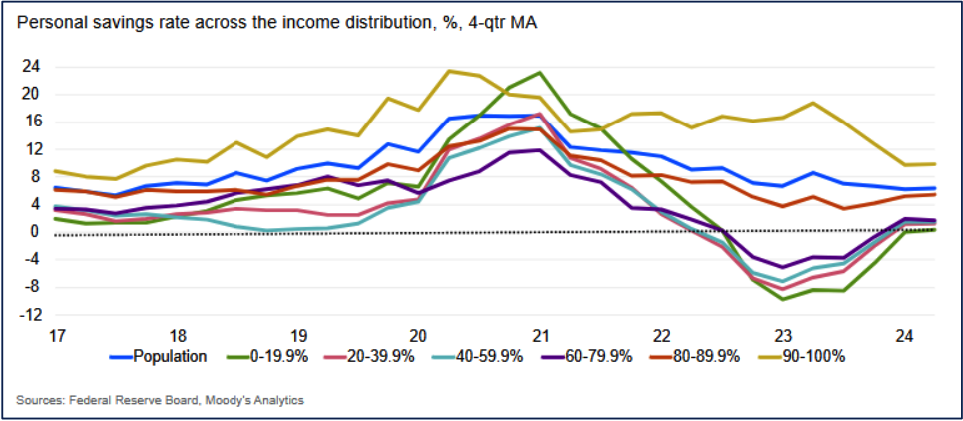
While average household savings in the U.S. was positive from 2017-2024 (blue line) with an upward spike in 2020-2021 attributable to Covid stimulus payments, savings were negative for up to 80 percent of households in parts of 2022 and 2023. The positive national average was driven by the top 20 percent of households that benefited the most from the post-Covid economic prosperity.
─────────────
1 Episode 2 – Senior Living In The Housing Crunch.
2 U.S. Outlook: From Exceptional to Challenging: Moody’s Analytics Economic View.
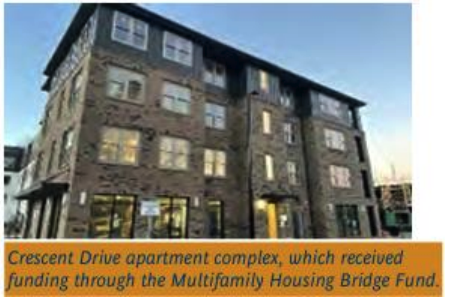
The good news is that at the end of 2023 and into 2024, savings rates began to converge across the household income distribution, and now savings rates are neutral or positive for each segment. But zero or low single-digit savings rates do not provide much of a cushion if unexpected expenses arise in the future. Further, with rising home prices and rents, an inability to accumulate savings today means renters are unable to save for a downpayment to purchase a home in the months and years ahead and may not have even enough to remain in their current home if the rent increases. To help address affordability challenges, each Federal Home Loan Bank has programs targeting homebuyer and renter needs in their districts. For example, the FHLBank of Boston’s Equity Builder program provides down payment assistance grants to first-time home buyers with household income below 80 percent of area median income. FHLBank of Cincinnati issued a letter of credit to its member Key Bank to support rehabilitation of low-income senior rental housing, while its Carol M. Peterson Housing Fund helps low-to-moderate income seniors age in place and has assisted more than 3,000 households since 2010. And at the FHLBank of Atlanta, the Multifamily Housing Bridge Fund provided more than $8 million to support development of more than 2,300 affordable rental housing units – many for senior citizens and in rural areas – targeting households earning less than 120 percent of area median income in 2023.
The housing affordability challenges facing the country require collaboration by public and private stakeholders at the local, state, and federal levels. The Federal Home Loan Banks stand ready to support their members and partners with targeted solutions that address challenges in their districts in 2025 and beyond.
─────────────
3 2023-Impact-Report-FINAL.pdf